
Way back in 2018, at Oculus Connect 5, when the Oculus Quest was officially announced, we got a beautiful glimpse of what felt like the future of VR. The Dead & Buried Arena demo showed off a shared-space multiplayer experience for conference attendees: multiple people, same physical room, same virtual world.
At the time, it felt revolutionary. Affordable, standalone, inside-out tracked headsets would mean you could enable experiences that only needed a handful of friends and a space such as a basketball court. Gone would be the days of co-located VR requiring expensive backpack PCs, dedicated venues, and extensive lighthouse setups. It felt like it would be the moment VR finally broke free.
And then… nothing happened.
The Quest headsets were revolutionary, and they’ve been great for a lot of reasons since. But from the start, they were locked down tightly by Facebook. There was no public API for shared-space experiences, and no sanctioned way for developers to build their own. The door had been shown — and then quietly closed.
The closest we got for a long time was Space Pirate Arena, which finally launched in 2022. It was fun, polished, and… very limited. It essentially relied on exploiting the max Guardian boundary size to avoid needing to share map data between headsets, and was a bit of a pain to set up.
By 2023, Facebook (now Meta) did release APIs like Spatial Anchors and shared-space tooling. Very few standout experiences have emerged from it, and none that have truly captured the magic of that early demo or unlocked a wave of experimentation. The tools now exist, but only within Meta’s carefully controlled sandbox.
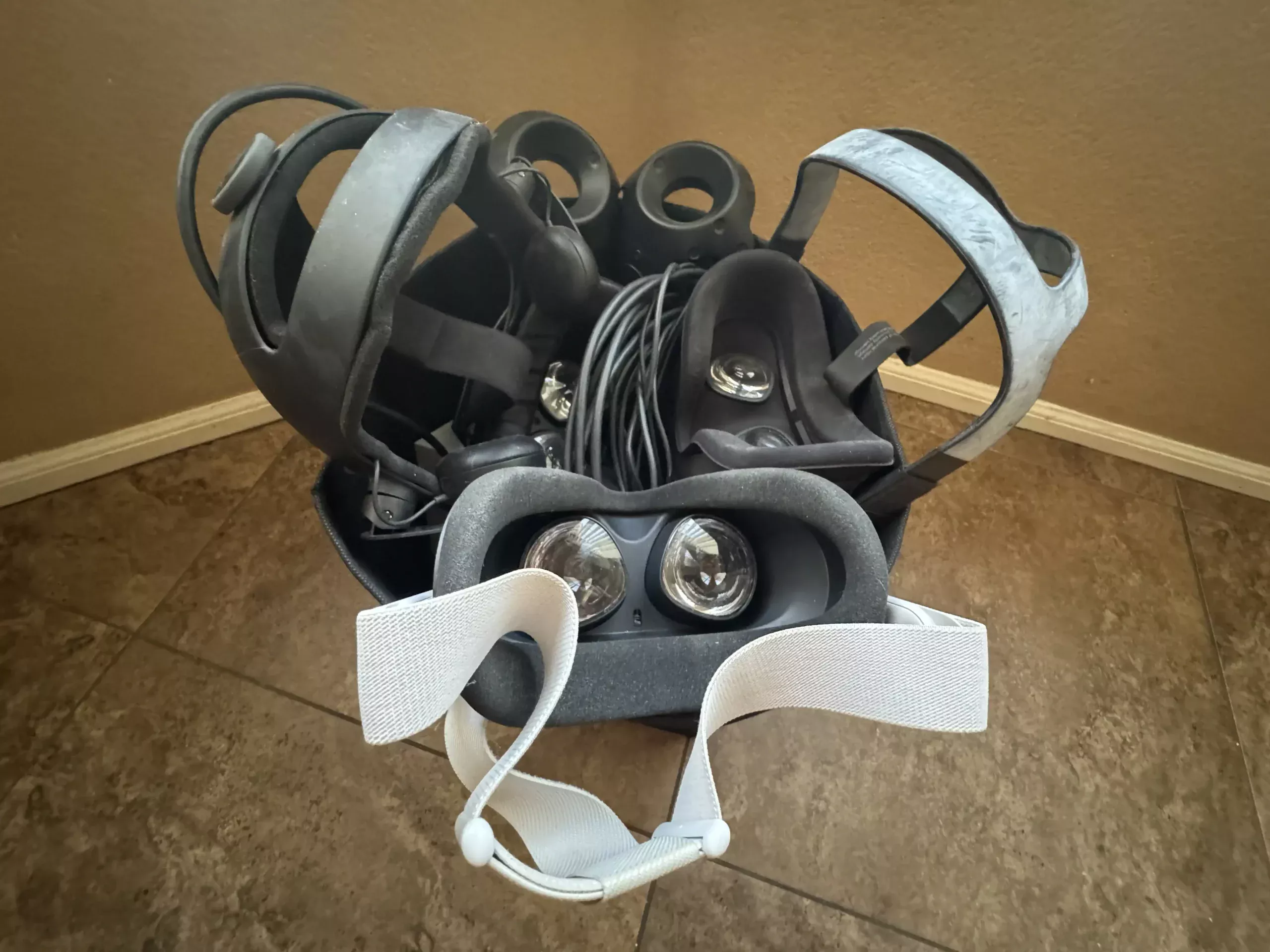
Now we’re on the Quest 3. Meanwhile, countless Quest 1s and Quest 2s sit on shelves, in drawers, or collecting dust. That’s a shame — because if Nintendo has taught us anything, it’s that “old” hardware is often still incredibly capable with the right art direction and smart game design. The Quest 1, especially, is far from useless silicon.
This is where Meta could do something genuinely meaningful.
Meta should unlock the bootloaders of no-longer-supported headsets and let hackers, tinkerers, artists, and researchers breathe new life into them. PC VR was wild in its early days — full of strange experiments, broken ideas, and unexpected innovation. But the success of the Quest (welcome as it was) pulled most of the industry toward standalone VR and forced everyone to play by Meta’s rules.
When hardware dies behind locked bootloaders, it doesn’t just stop getting updates — it stops being interesting.
There have been valiant attempts to push back against Meta’s dominance. The Lynx R-1, for example, is a serious effort to build a more open XR device. But building a headset from scratch is a herculean task for a startup, and the R-1 shows both how hard that is and how much courage it takes. We’re rooting hard for a future Lynx R-2.
We’re also hopeful about the rumored Valve Deckard headset. Valve’s track record with the Steam Deck matters here: they’ve consistently stood behind the idea that when you buy a device, it’s your computer. You can tinker with it, break it, install whatever you want, and learn from it. That philosophy is how ecosystems stay alive.
VR doesn’t need more locked black boxes filling landfills. It needs curiosity, experimentation, and freedom.
Unlock the graveyard. Let the hardware live again.