
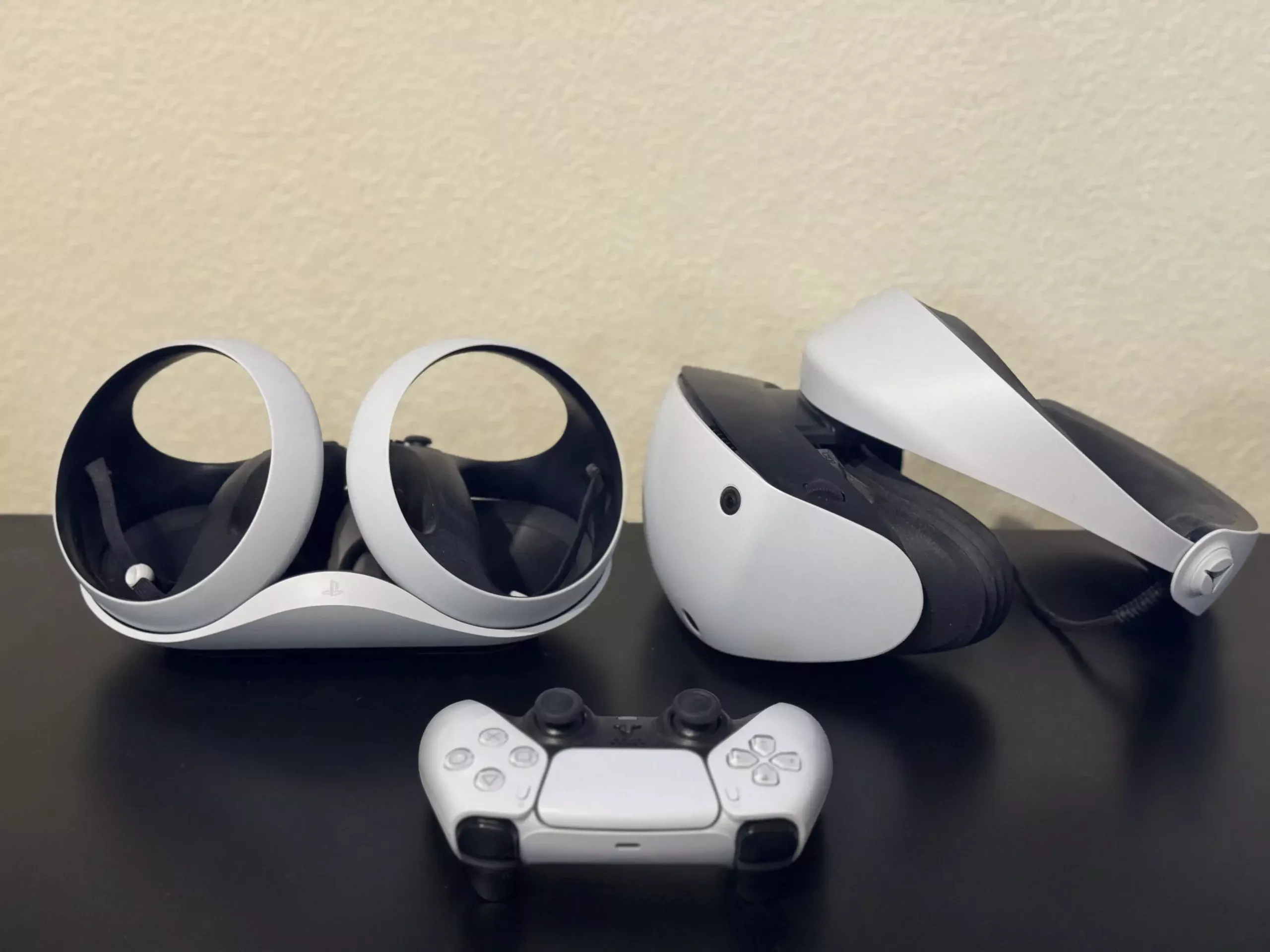
In VR, haptics — aka tactile feedback like the rumble motors in your controllers — have a much bigger impact on immersion than you might expect. Vision and audio get most of the attention, but touch is the thing that convinces your brain that what you’re doing matters. A subtle vibration when your virtual foot hits the ground, a sharp jolt when a weapon fires, or resistance when you pull a trigger can completely change how real an experience feels.
Over the years, we’ve seen a lot of clever ideas in this space. Full-body haptic vests, gloves with force feedback, gun stocks with recoil motors, even chairs that shake or tilt with the action. Some of these are genuinely impressive, but many have been clunky, expensive, poorly supported, or limited to niche demos. For most players — and most developers — haptics beyond basic rumble just weren’t practical.
Instead of treating vibration as a binary on/off effect, the DualSense uses two fairly powerful LRAs to deliver a wide range of sensations. Think of them like a speaker designed to vibrate a mass rather than move air — punchier, faster, and much higher resolution than classic rumble motors. This allows the controller to produce everything from a soft, textured buzz to a sharp, directional snap. You don’t just feel that something happened; you feel what happened.
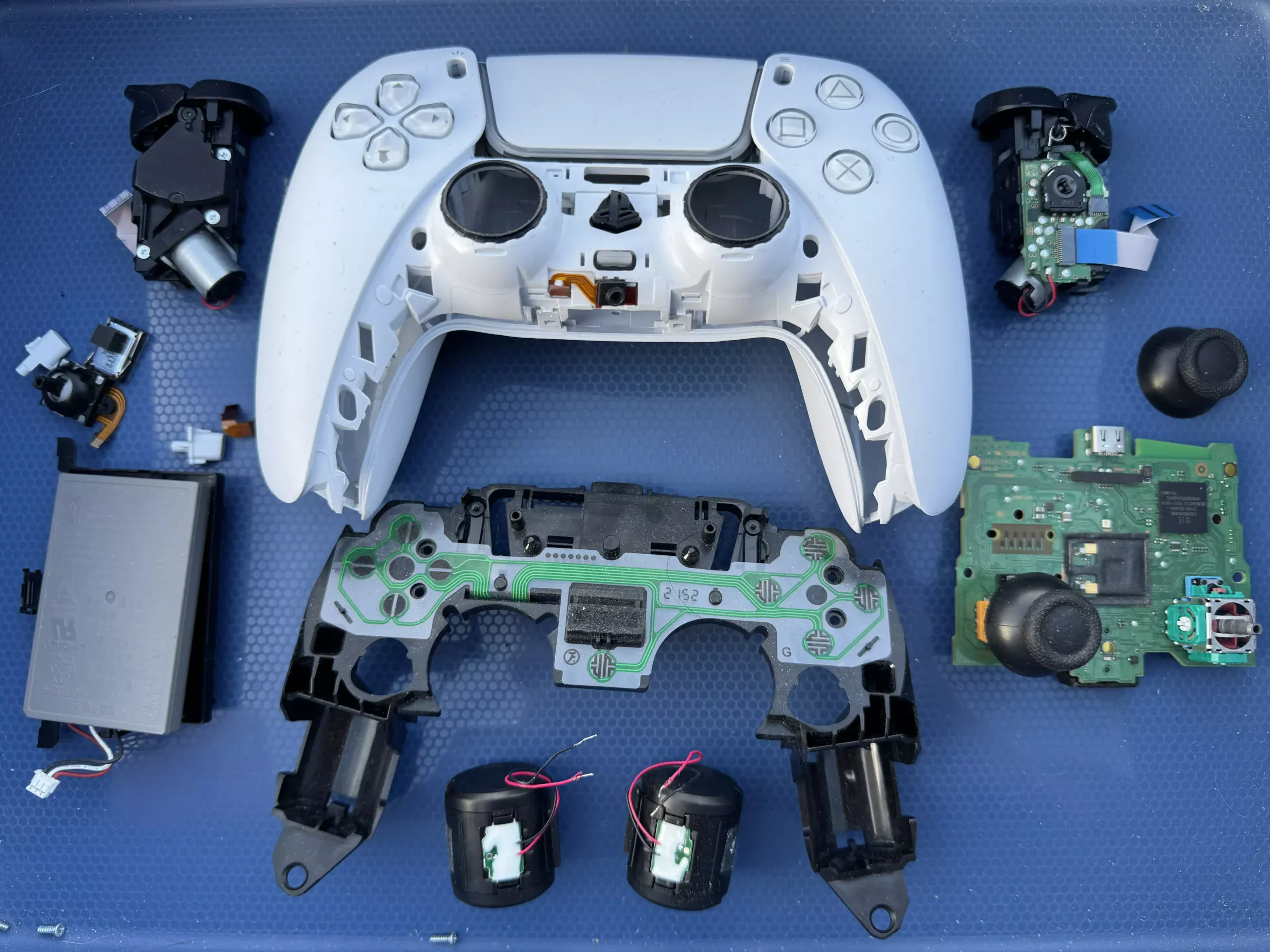
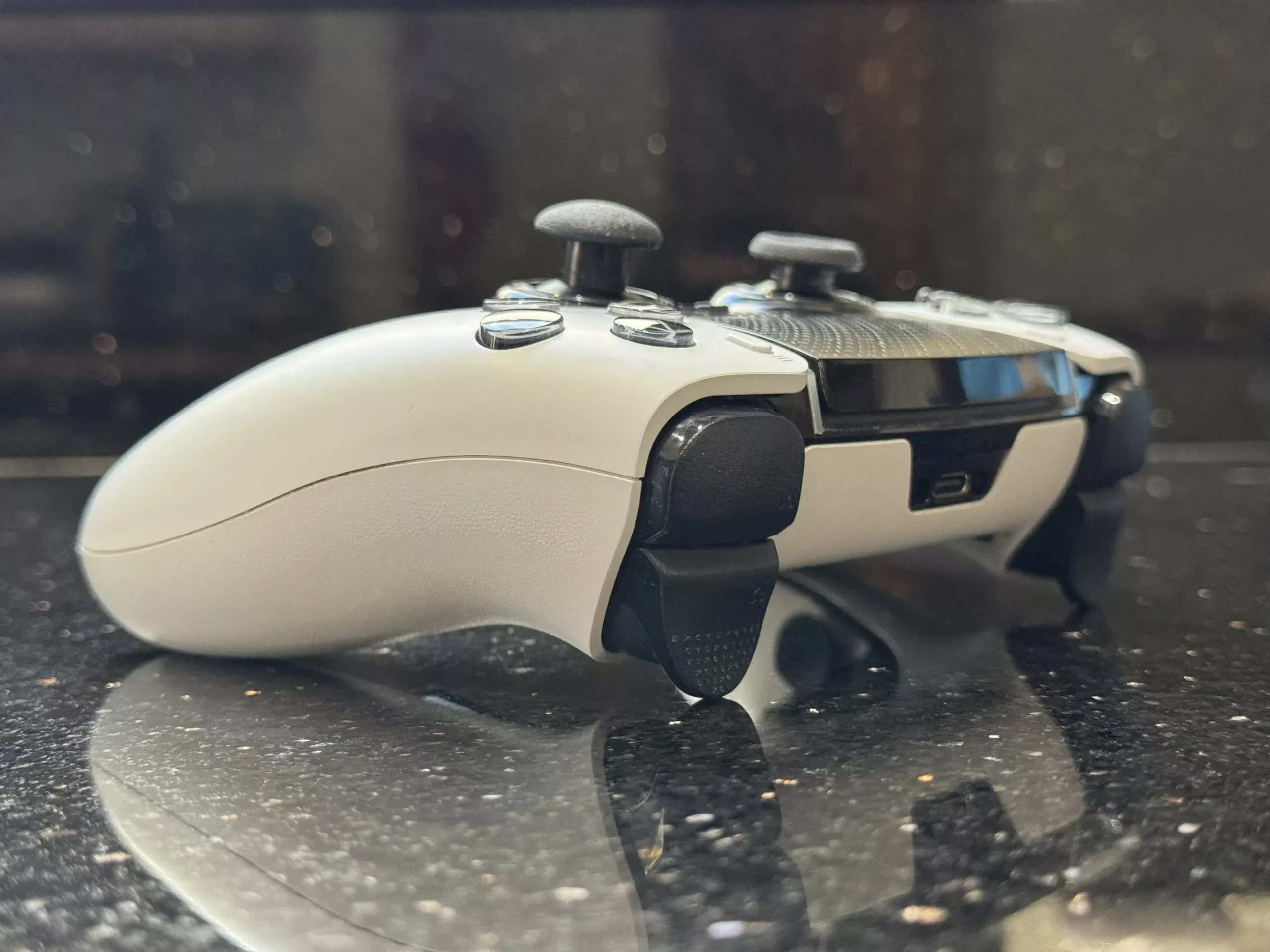
Alongside the LRAs is a standard speaker, which adds another layer of sensory detail, and then there’s the real magic trick: the adaptive triggers. By dynamically adjusting resistance, the triggers can simulate tension, friction, or mechanical feedback. Drawing a bow, squeezing a stiff brake pedal, firing a gun with a heavy trigger pull, or feeling a trigger lock up when a weapon jams suddenly become physical actions, not just button presses. In some games, each weapon can have a distinct feel.
The key move Sony made was baking all of this into the standard controller. That meant millions of players had the hardware by default, which in turn gave developers a real incentive to design around it. When a feature is guaranteed to be there, people actually use it — and that’s where creativity flourishes.
Sony carried this philosophy forward with the PSVR2 controllers. They’re clearly cut from the same cloth as the DualSense. The LRAs are a bit smaller, and the adaptive triggers likely a bit weaker — Sony prioritized lighter weight for controllers you’ll be swinging around in VR — but the effect is still excellent. Grasping different objects feels distinct. Firing different weapons has character and weight. Even simple interactions feel more grounded when your hands are constantly getting meaningful feedback.
The headset itself also includes haptic feedback in the headband, which adds yet another point of immersion. A nearby explosion, a sudden impact, or even environmental effects can be felt directly on your head, subtly reinforcing what you’re seeing and hearing.
As a bit of an aside, the PSVR2 is also likely the cheapest headset on the market with built-in eye tracking. That’s a big deal. It gives developers a wider audience to experiment with eye-tracked mechanics and foveated rendering, without locking those ideas behind extremely high-end hardware.
So while the PSVR2 hasn’t been a runaway commercial success, I’m still thankful it exists. It’s pushing advanced features — especially haptics — into a more accessible space, and with an official PC adapter it is helping keep PC VR alive as well. My fingers are crossed that Sony keeps leaning into this direction, and continues driving haptics forward with whatever the PS6 ends up bringing.